

Use data analytics tools to identify patterns and trends, enabling you to make informed decisions on cost optimization. Variable costs are crucial to production volume or sales, as they dynamically fluctuate based on these activities. As production increases, so do variable costs, resulting from higher raw material, labor, and other expenses. Setting the right prices for products or services is crucial for any enterprise. Understanding variable costs allows businesses to determine the true cost of goods (per unit of product).

Importance in Business Decision-Making
With in-depth expense tracking, powerful reporting features, and around-the-clock support, we can support your business as it scales up and reaches new heights. In the variable expense equation, the variable expense is a dependent variable—internal and external factors are independent variables. Here, internal and external factors refer to components like production scale, workforce, socio-political environment, etc.

Approach to managing variable costs and key techniques implemented

The total expenses incurred by any business consist of variable and fixed costs. An expense is variable when its total amount changes in proportion to the change in sales, production, or some other activity. In other words, a variable expense increases when an activity increases, and it decreases when the activity decreases.
- Let’s look at a variable cost example to understand the calculation.Let us assume that a company that manufactures 900 linen shirts daily.
- In calculating the ratio, fixed costs, which are the expenses that remain constant regardless of variations in production levels, are excluded.
- From that point on, though, the marginal gain in output diminishes as each additional barber is added.
- Strong businesses understand that CFOs play a pivotal role in this arena.
- If production or services are increasing, then variable costs should also increase.
- We cannot control these costs as these remain fixed and will only incur when there is goods production.
Flexible business decisions
Since these costs fluctuate retained earnings with production, they can either increase or decrease the company’s profitability depending on how well they’re managed. For example, if a company can keep its variable costs low while maintaining high production levels, its profit margins will grow. Unlike fixed costs, variable costs are directly related to the cost of production of goods or services. Variable costs are commonly designated as the cost of goods sold (COGS), whereas fixed costs are not usually (but can be) included in COGS. Fluctuations in sales and production levels can affect variable costs if factors such as sales commissions are included in per-unit production costs.
- A key concept within this domain is “variable cost,” which plays a significant role in determining production expenses and overall profitability.
- Fixed costs differ from variable costs in that, generally, fixed costs will not change, regardless of volume fluctuations or the amount of goods produced or services provided.
- He has proudly served thousands of companies in identifying gaps in talent, capabilities, systems, and more.
- The intersection of marginal cost and marginal revenue identifies the profit-maximizing level of production (see the chart above).
- Since costs of variable nature are output-dependent, the costs incurred increase (or decrease) given varying production volumes.
Raw Materials
- Examples of fixed costs are rent, salaries, insurance, and office supplies.
- As another example, a business only incurs credit card fees when it sells products to customers that are paid for with a credit card; if there are no sales, then there are no credit card fees.
- Even fixed costs can change over time, but the change will not be related to production.
- Well, in each of these cases, the finance team, along with the CFO, used cost data to transform the company’s profitability.
- Variable costs increase or decrease depending on a company’s production volume; they rise as production increases and fall as production decreases.
- While production volume is a primary driver of variable costs, it is not the only factor.
Implementing effective cost allocation methods is crucial for accurately attributing variable costs to products or services. Activity-based costing (ABC) is a common method that assigns costs based on the activities that drive them. This approach provides a more granular view of cost drivers and helps in better cost management. Additionally, the interplay between variable costs and fixed costs can complicate cost management strategies.
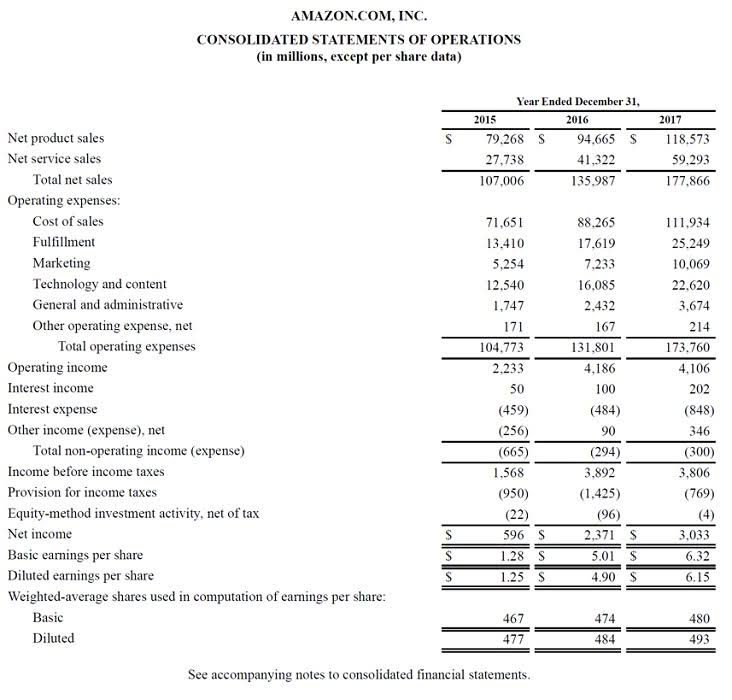
The dynamic nature of these expenses means that the more goods or services you produce, the higher your average or actual variable costs will be. Since variable costs are tied to output, lower production volume means fewer costs are incurred, which eases the cost pressure on a company — but fixed costs must still be paid regardless. Since a company’s total costs (TC) Suspense Account equals the sum of its variable (VC) and fixed costs (FC), the simplest formula for calculating a company’s variable costs is as follows. Understanding variable costs is integral to operational and financial planning within a business. It provides insights into how changes in production levels affect overall costs and profitability, enabling more informed decision-making regarding pricing, budgeting, and strategic planning.
What Does Variable Cost Mean?
Total costs are the sum of a business’s fixed costs and variable costs, representing the overall expenses incurred in producing and selling goods or services. Marginal costs are crucial for determining the optimal level of production. Businesses variable expenses definition economics aim to produce up to the point where marginal cost equals marginal revenue, known as the profit-maximizing output. Producing beyond this point would result in the cost of producing an additional unit exceeding the revenue it generates, thus reducing profitability. For the retail industry, variable costs include the cost of goods sold (COGS), which varies directly with sales volume.